
Clean Water, Restored Hope: How PISC Is Fighting Waterborne Diseases in Republic of Congo
In Republic of Congo, access to safe drinking water remains a daily challenge for thousands of families. Through community-based boreholes and sustainable water points, PISC is helping reduce waterborne diseases such as cholera and typhoid while restoring dignity, health, and hope to vulnerable neighborhoods.
7/21/20252 min read
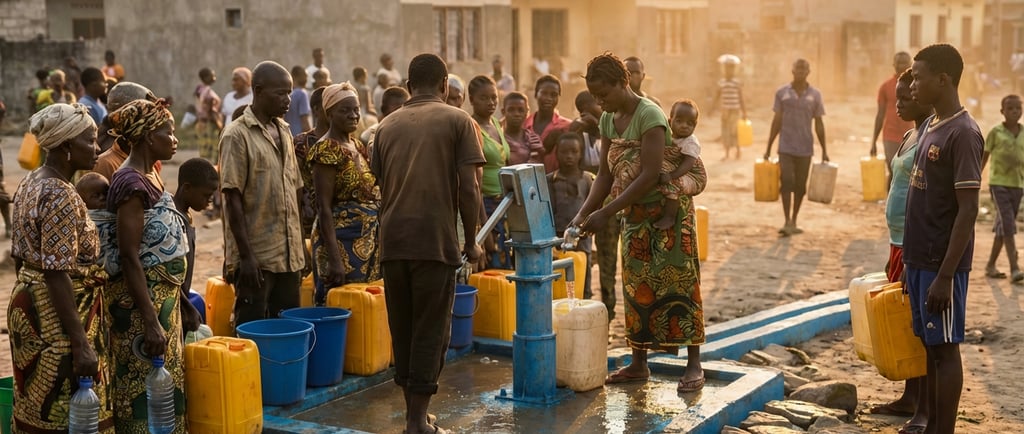
In Brazzaville, the paradox is striking: despite being bordered by the majestic Congo River, the capital city faces a major challenge. Nearly one in two residents still lacks safe access to drinking water. This precarious situation exposes thousands of families to an invisible yet devastating threat: waterborne diseases.
In response to this emergency, the Public Interest Science Center (PISC) is deploying grassroots solutions that are transforming daily life in underserved neighborhoods.
The Threat of Unsafe Water: A Matter of Survival
Untreated water from stagnant sources or makeshift wells is a major vector of dangerous pathogens. In sub-Saharan Africa, waterborne diseases remain among the leading causes of preventable mortality.
Main identified threats:
Cholera: A medical emergency that can be fatal within hours.
Typhoid fever & dysentery: Persistent infections linked to the consumption of contaminated water.
Hepatitis A & shigellosis: Viruses and bacteria that primarily affect the most vulnerable populations.
Did you know? Children under the age of five are the first victims of these infections, which hinder their growth and disrupt their education.
PISC’s Impact: Infrastructure at the Heart of Communities
PISC does more than distribute water; it installs sustainable infrastructure where public networks fall short.
Resilient boreholes: Installation of manual and solar-powered pumps to ensure energy autonomy.
Strategic distribution points: Reducing the time spent fetching water—a task that primarily falls on women and children.
Visibility and commitment: Each water point, clearly marked “DON DU PISC,” becomes a hub of community life and solidarity.
Voices from the Community: Restored Dignity
The impact is best measured through the voices of local residents:
Marie, mother of three: “Before, the river was our only option. My children constantly suffered from stomach pains. Today, PISC water is health insurance for my household.”
Jean, a retiree: “The ordeal of walking kilometers with heavy jerrycans is over. We fetch water in an orderly and dignified way.”
Proven Health Outcomes
After just six months of activity in the targeted areas, community health indicators show a positive trend:
Significant decrease in cases of acute diarrhea among infants.
Reduced pressure on local health centers for typhoid-related consultations.
These results confirm WHO recommendations: investment in the WASH sector (Water, Sanitation and Hygiene) is one of the most powerful levers for sustainable development.
Conclusion: More Than a Resource, a Human Right
The PISC project in Brazzaville demonstrates that targeted local action can break the cycle of disease. Each borehole represents a victory against vulnerability and an investment in the human capital of the Republic of Congo.
However, sustaining these gains depends on continued collaboration between community actors, public authorities, and international partners—so that clean water is no longer a luxury, but an effective right for every resident of Brazzaville.
Official Sources and References
International Organizations
Development Partners & News
French Development Agency (AFD) – Water Projects in Brazzaville
Les Échos du Congo-Brazzaville – Analysis of Water Shortages
National Authorities